Table of Contents▾
Walk into a busy dealership on a Saturday and you'll experience controlled chaos. Phones ringing. Salespeople juggling clients. Finance managers buried in paperwork. Service advisors try to keep customers calm while technicians work through a backlog. This scene has defined automotive retail for decades.
What has changed is what happens behind the scenes.
Dealerships today are no longer just selling vehicles. They are about managing complex data environments shaped by online shopping behavior, fluctuating inventory costs, rising interest rates, and strict compliance requirements. A customer may research for weeks, compare prices across dozens of sites, complete a credit application, then expect a seamless experience that mirrors their digital experience.
Meeting those expectations without intelligent systems is nearly impossible.
That is why artificial intelligence embedded within CRM (Customer Relationship Management) and DMS (Dealer Management Systems) platforms is becoming the backbone of modern dealerships. Solutions that integrate AI directly into daily workflows help dealers convert more leads, reduce operational waste, manage financing risk, and deliver experiences that feel personal rather than transactional. Platforms like Get My Auto that combine CRM and DMS capabilities with AI-driven features, reflect a broader industry shift toward unified ecosystems instead of disconnected tools.
AI is no longer a futuristic add-on. It is as essential as the showroom itself.
The Hidden Weaknesses of Traditional Dealership Systems
Dealerships continue to operate on legacy platforms built for a different era. These systems excel at storing information but struggle to interpret it. They are great at generating reports but rarely provide actionable insights. Most importantly, they depend heavily on manual input, which causes delays and inconsistencies.
Departments often function in isolation. Sales tracks leads. Service manages appointments. Finance handles contracts. Marketing pushes campaigns. Valuable signals get trapped within each silo, preventing leadership from seeing the full picture.
This fragmentation produces problems:
- Leads sit untouched or receive generic responses
- Marketing messages feel impersonal and repetitive
- Inventory decisions rely on outdated reports
- Service opportunities are missed
- Financing portfolios are monitored only after issues arise
The dealership ends up reacting to problems instead of preventing them. Opportunities slip through the cracks not because staff are careless, but because human attention has limits.
AI changes processes by turning scattered data into a cohesive intelligence layer.
How AI Turns CRM Systems Into Revenue Engines
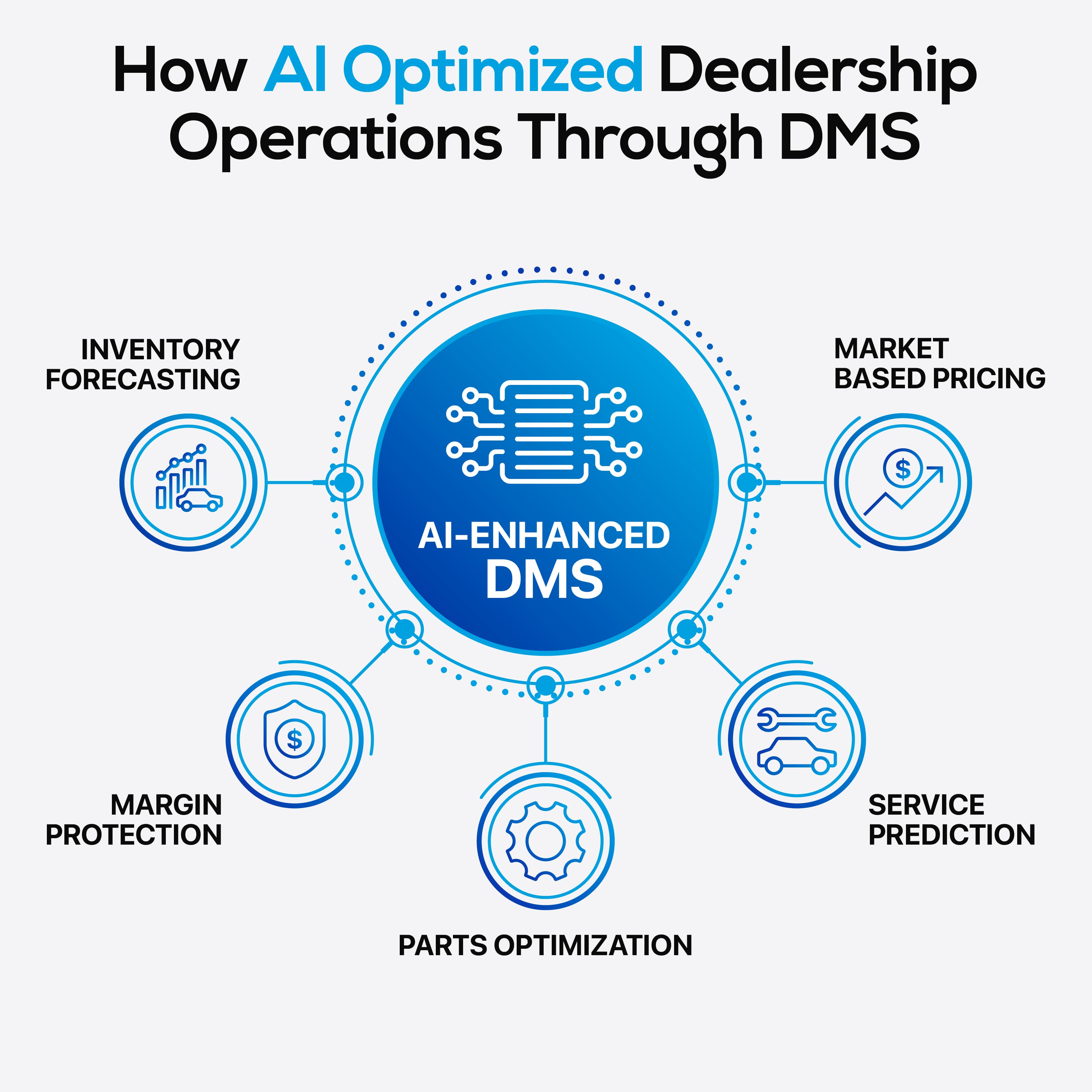
A traditional CRM records interactions. An AI-powered CRM interprets them.
Predictive Lead Scoring That Mirrors Real Buyer Intent
Not all leads are equal. Some shoppers browse casually. Others are ready to buy immediately. AI models analyze patterns such as website behavior, vehicle page views, financing inquiries, communication history, and demographic indicators to estimate purchase likelihood.
Instead of assigning leads randomly, these actions are ranked by urgency and probability. Sales teams can focus their energy where it matters most. High-intent buyers receive immediate attention, while slower prospects enter nurturing sequences that keep them engaged without overwhelming staff.
Dealers often discover that conversion improves not because they hired more salespeople, but because they stopped wasting time on cold prospects.
Personalized Communication Across Channels
Modern buyers move fluidly between email, text messages, chat widgets, and social media. AI tracks engagement patterns to determine the proper channel for the customer and when they are most likely to respond.
If someone constantly ignores emails but replies to texts within minutes, the system adapts. If engagement drops, outreach frequency adjusts automatically. Messages can also reference the exact vehicles a shopper viewed, creating the impression of a highly attentive salesperson before human interactions. This builds trust with the customer during their buying journey. Ava AI for car dealerships is built to handle this kind of channel-aware follow-up.
Real-Time Campaign Optimization
Traditional marketing campaigns operate on fixed timelines. Dealers launch promotions, wait for results, then adjust. AI shortens that feedback loop dramatically.
Performance is continuously monitored. Messages that resonate are amplified. Underperforming tactics are refined or replaced. Pricing incentives, subject lines, and timing can evolve dynamically, producing a living campaign rather than a static one.
For dealerships competing in crowded markets, that agility can be the difference between steady traffic and empty showrooms.
Strengthening In-House Financing and BHPH Operations
For dealerships offering Buy Here Pay Here (BHPH) programs or in-house financing, the stakes extend beyond selling vehicles. They are managing loan portfolios that carry real financial risk. Small misjudgments can compound into losses over time.
AI introduces a layer of discipline that complements human judgment.
Broader Risk Assessment Beyond Credit Scores
Traditional underwriting leans heavily into credit history. AI models incorporate additional signals, including payment behavior, employment stability, and historical performance of similar customers. This provides a more nuanced view of repayment likelihood.
Dealers then have approval flexibility while making smarter decisions about structure and pricing.
Optimized Deal Structuring
AI analyzes thousands of past contracts to identify combinations of down payments, terms, and interest rates associated with successful outcomes. Recommendations are based on evidence rather than intuition alone.
For BHPH operators, even small changes in structuring can significantly reduce default rates while preserving sales volume.
Early Warning Systems for Portfolio Health
Instead of discovering problems after accounts become delinquent, AI monitors behavior continuously. Missed communications, changes in payment patterns, or financial stress trigger alerts that allow proactive outreach.
A conversation at the right time can prevent repossession, protect revenue, and preserve customer relationships.
Compliance Support in a Regulated Environment
Financing must adhere to strict disclosure requirements and documentation standards. AI tools can flag inconsistencies, missing forms, or irregular patterns that might expose dealerships to regulatory scrutiny.
This function acts as a safety net, reducing risk while giving staff the freedom to focus on customer service rather than paperwork.
AI Inside the Dealer Management System
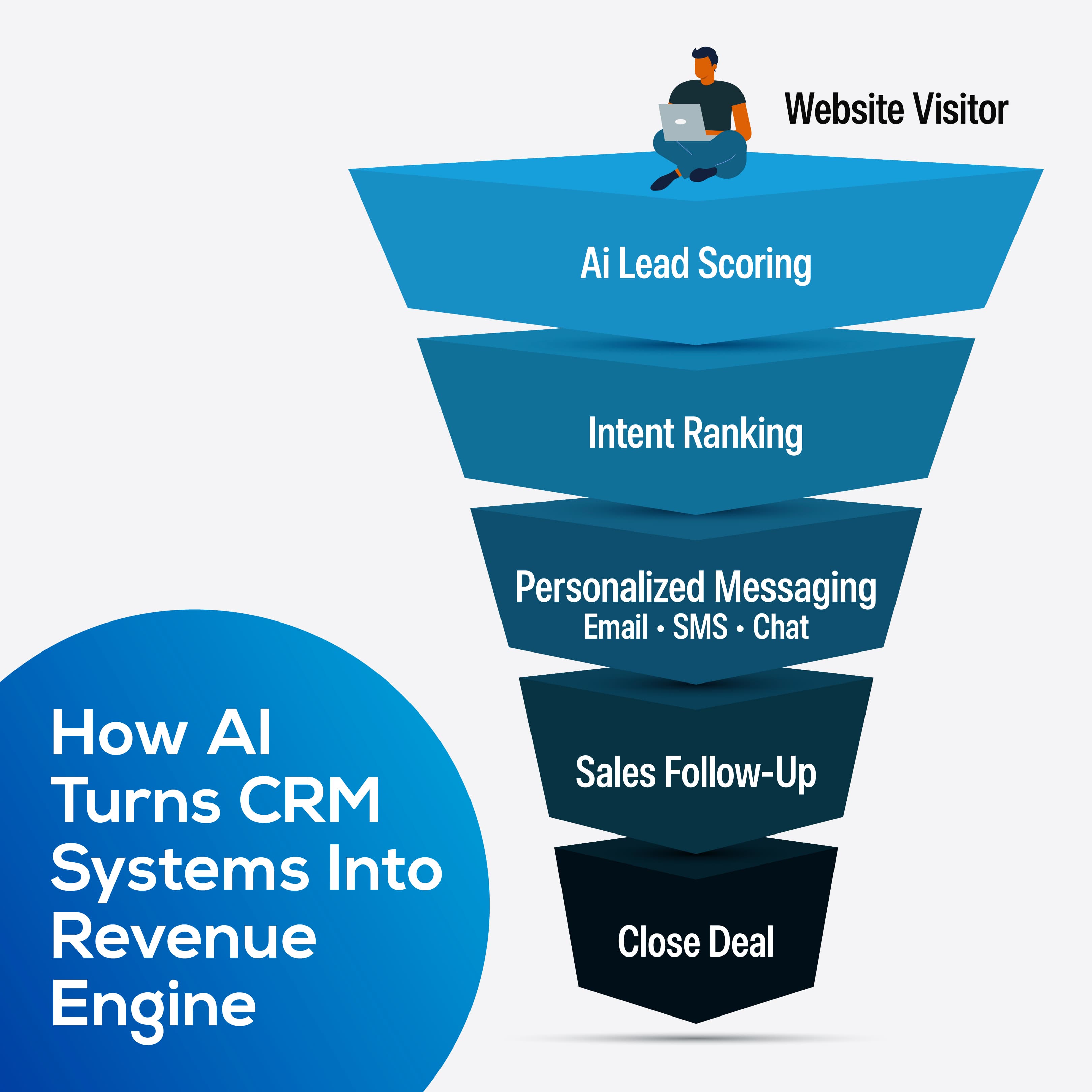
While CRM systems drive customer engagement, the Dealer Management System (DMS) oversees core operations. When enhanced with AI, it becomes a strategic command center rather than a passive record keeper.
Smarter Inventory Planning
Inventory mistakes are expensive. Overstocking ties up capital and increases floor plan costs. Understocking leads to missed sales and frustrated customers.
AI evaluates regional demand trends, seasonal shifts, competitor pricing, and historical sales velocity to forecast vehicles that will move efficiently. Acquisition decisions become data-driven rather than speculative.
Dealers can then stock what customers actually want instead of what they think is appealing.
Dynamic Pricing That Protects Margins
Online transparency means buyers often know market pricing before stepping foot on a dealership. Static pricing strategies can either scare shoppers away or erode profit unnecessarily.
AI monitors market conditions in real time, factoring in days on lot, demand indicators, and competitor listings. Recommended adjustments help maintain competitiveness while safeguarding gross profit.
Service Department Intelligence
Service remains one of the most reliable revenue streams for dealerships. AI can predict maintenance needs based on mileage, ownership cycles, and manufacturer guidelines, enabling proactive appointment reminders.
Parts inventory can also align with projected service demand, reducing delays and excess stock. Customers appreciate timely service, and technicians spend less time waiting for components.
Why Adoption Is Accelerating Now
Dealers implementing AI across CRM and DMS platforms report improvements across key performance indicators:
- Higher conversion from lead to sale
- Lower acquisition costs
- Faster inventory turnover
- Improved per-vehicle profitability
- Stronger customer satisfaction
Beyond internal metrics, external pressure is mounting. Customers are accustomed to a digital experience in retail, banking, and travel, and expect the same convenience when buying vehicles.
Dealerships that rely on manual processes struggle to keep pace with customer expectations.
The Human Side of Intelligent Technology
Despite concerns, AI is not replacing dealership professionals. It is removing friction that prevents them from performing at their best.
Salespeople spend less time chasing unqualified leads and more time building relationships with buyers. Finance managers gain analytical support for structuring deals responsibly. Service advisors can focus on customer experience instead of administrative tasks.
Leadership benefits from a unified view of performance across departments, enabling faster, more confident decision-making.
In many ways, AI restores the personal touch by handling repetitive work behind the scenes.
Building a Dealership Ready for the Next Decade
Automotive retail will continue to evolve as electrification, online purchasing, and changing consumer behavior reshape the market. Dealerships that utilize intelligent systems are better positioned to adapt quickly.
AI-powered CRM and DMS platforms provide the visibility needed to manage risk, allocate resources, and deliver experiences that feel modern rather than outdated.
In a landscape defined by data, intuition alone is no longer enough. Sustainable growth increasingly depends on the ability to transform information into action before competitors do.

AI-powered CRM and DMS platforms are not just technological upgrades. They represent a shift toward smarter, more responsive dealerships that operate with clarity rather than guesswork. As competition intensifies and consumer expectations rise, intelligent systems will increasingly define which dealers thrive and which struggle to keep up.
Topics
Share this article
Help others discover this content
Continue Reading
View All
ChatGPT Ads for Auto Dealers: What to Know (2026 Guide)

AI in Auto Dealerships: The New Competitive Edge

What Is an AI BDC for Car Dealerships?