Table of Contents▾
Short answer: auto dealer social media marketing in 2026 means running your store like a local media brand. Short, phone-shot videos of real inventory and real staff go out on YouTube, Instagram, Facebook, and TikTok. The clips that start conversations get paid distribution. Every comment and DM gets answered within 15 minutes. And the scoreboard is conversations, appointments, and sold units, not likes.
For a decade, most dealership social media looked the same: a manufacturer image, a stock graphic for the weekend sale, a link to the inventory page, and "Call us today!" in the caption. Buyers scrolled past it then, and they scroll past it faster now.
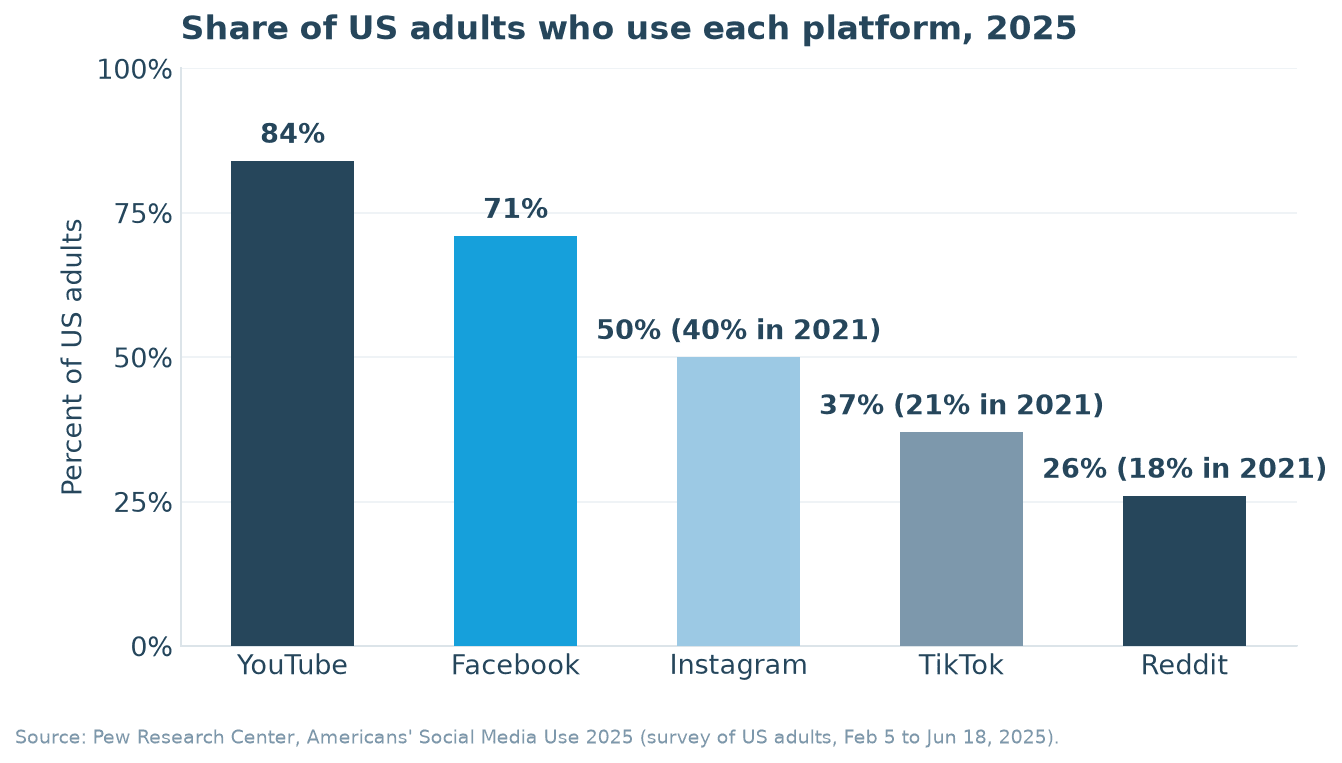
The audience did not leave. According to Pew Research Center's 2025 survey, 84 percent of US adults use YouTube, 71 percent use Facebook, half use Instagram, and 37 percent use TikTok, with Instagram and TikTok both well up from 2021. Car buyers are on these platforms during the purchase, too. Cox Automotive's 2025 Car Buyer Journey Study found that 26 percent of vehicle buyers used social media as one of the sites they shopped on, and that buyers spent almost two fewer hours shopping online than the year before. The window to earn a shopper's trust is shorter, and more of it is spent watching video.
That is the shift this guide is about. Social media is no longer a branding line item. Done right, it is a video-driven revenue engine that starts direct conversations and lands appointments. What follows is the model, the platform roles, the content system, the response rules, and a 90-day plan.
Why the Old Dealership Social Playbook Stopped Working
The traditional playbook runs on low-value automated posting. A marketing coordinator or an outside agency pushes out repetitive content, reports likes and reach, and treats social as an expense. Here is how that model compares with what works now.
| Old model | 2026 model | |
|---|---|---|
| Content | Template graphics and stock photos | Phone-shot video of real cars and real people |
| Distribution | Passive posts to page followers | Local reach, plus paid distribution of proven clips |
| Call to action | "Visit our website" or "Call now" | A question the viewer answers in the comments or DMs |
| What happens next | Nothing | A DM conversation, then a booked appointment |
| Scoreboard | Likes, followers, reach | Conversations, appointments, sold units |
When every dealership posts the same corporate assets, buyers have no basis to choose one store over another. Market share goes to the stores that show real people, real vehicles, and real expertise.
Social Video Is Now Dealership Media
Shoppers use social platforms to evaluate a dealership's credibility, compare models, check trim features, and decide which sales team feels safe to work with, long before they step onto the showroom floor. That is the job local TV and print used to do for dealers, and the dealership now has to do it for itself.
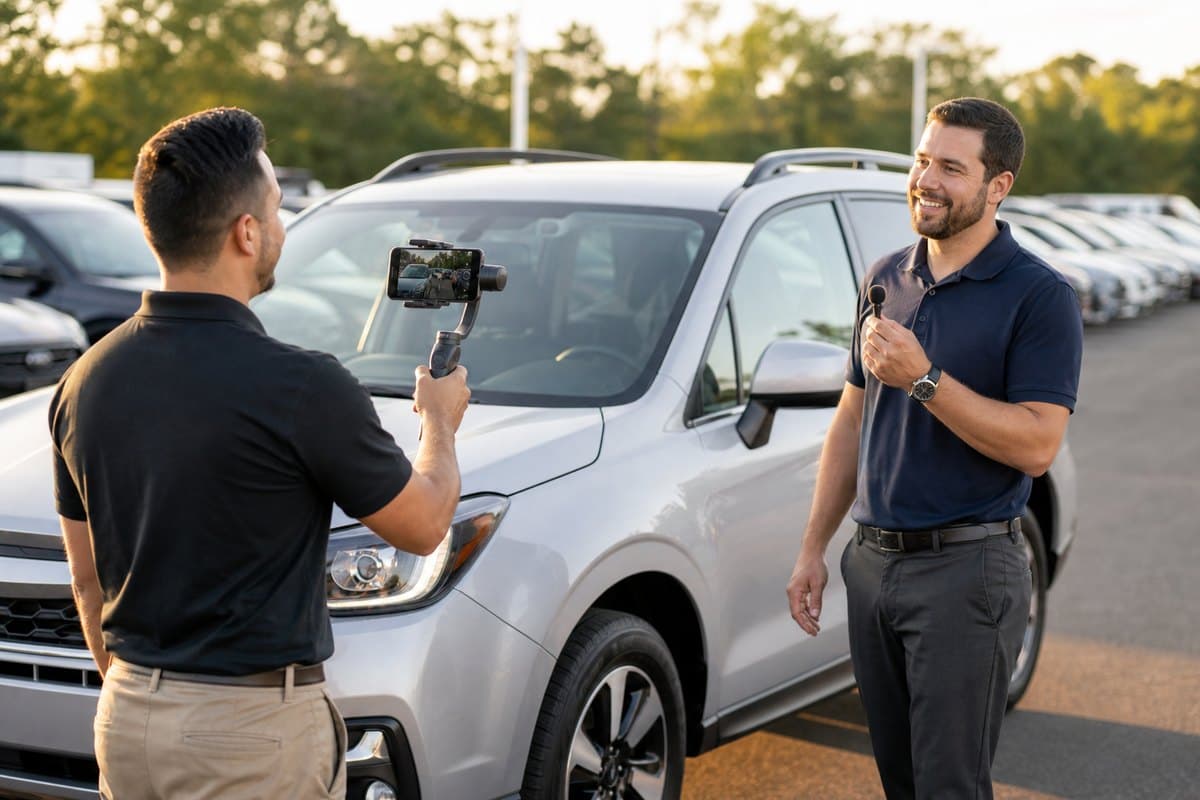
The goal is not a TV commercial. It is native video shot on a modern phone, made for how people actually watch. High-performing dealer content has four ingredients:
- Real on-lot vehicles. Actual inventory parked on your lot, including the pre-owned trade-ins, not studio stock art.
- Real employees. On-camera staff who welcome buyers and give honest answers.
- Buyer education. Straightforward breakdowns of features, towing capacity, cargo dimensions, and real-world ownership pros and cons.
- Customer proof. Delivery moments, owner stories, and community involvement that back up your reputation.
Authentic does not mean sloppy. It means credible, clear, and helpful, built for the way people consume video today.
Platform Roles: Where Each Channel Fits the Buyer's Journey
Each network does a different job. Posting one video everywhere without adapting it limits what it can do.
| Platform | US adults who use it (Pew, 2025) | Role for a dealership | Formats that work |
|---|---|---|---|
| YouTube | 84% | Deep trust, detailed buyer education, long-term consideration | Model reviews, trim comparisons, real test drives, buying and ownership advice |
| YouTube Shorts | Part of YouTube's 84% | Broad local discovery, recycling long-form video | Fast feature highlights, quick tips, one-take opinions, inventory updates |
| 71% | Local community, Messenger and lead-form inquiries, used inventory | Reels, customer proof, community highlights, targeted service offers | |
| 50% | Visual proof, staff personality, customer stories, active DMs | Reels, delivery moments, staff highlights, walkarounds, interactive Stories | |
| TikTok | 37% | Discovery, culture, younger shoppers | Opinion-led clips, day-in-the-life, unexpected features, quick walkarounds |
Two notes on the numbers. Pew reports that about half of US adults visit Facebook and YouTube at least once a day, so those two are still the daily habit for most of your market. And Instagram reaches eight in ten adults under 30, which is where first-time buyers and their co-signers live.
YouTube: The Dealership's Long-Term Content Engine
Short-form platforms generate awareness. YouTube works as a library that keeps building trust after you post, because shoppers watch long-form video when they are narrowing vehicle choices and deciding where to buy.
A sustainable cadence is one high-utility long-form video each week, paired with three to five short clips cut from the same filming session. Four formats carry most of the weight:
- 1"Should you buy it?" walkarounds. Pick a specific trim, explain who it is for, and say who should skip it.
- 2Side-by-side comparisons. Park two competing models next to each other and show the differences in cargo space, tech, and rear-seat legroom.
- 3Used-car value explainers. Feature a notable pre-owned arrival and explain why that model year and mileage is a smart buy.
- 4Service and maintenance realities. Let a service advisor or master tech explain common maintenance, tech setup, or accessory options.
Put Real People on Camera
People buy from people, not from logo graphics. Two or three consistent, willing on-camera team members build the familiarity that lowers friction when a shopper walks in. A simple lineup:
- A sales specialist as the product expert: walkarounds, comparisons, and payment questions.
- A used-car manager as the appraisal expert: trade-in videos, what makes a clean pre-owned unit, and how the store prices.
- A service advisor as the technical voice: maintenance, tech setup, and accessories.
The goal is not to create social media celebrities. It is to humanize the business. When shoppers arrive asking for the person they watched online, the sales cycle gets shorter.
Four Content Pillars and Hooks That Start Conversations
To keep production simple and repeatable, organize everything into four pillars:
- 1Inventory energy. Fresh trade-ins, hard-to-find trims, and aged units reframed around real-world value.
- 2People and culture. Employee spotlights, behind-the-scenes operations, and day-in-the-life moments.
- 3Buyer help. Real answers on financing, trade-in values, lease returns, towing, and family seating.
- 4Proof and community. Deliveries, review shoutouts, local school partnerships, and community events.
Hooks that get a viewer to stop and answer:
- "Before you buy this SUV trim, watch this 60-second walkthrough."
- "Three things most buyers overlook when trading in a financed vehicle."
- "What does your monthly budget actually buy on our lot right now?"
- "We just took in one of the cleanest pre-owned trucks we have seen all month."
- "Can you fit three full-size car seats across the second row of this crossover? Let's test it."
Organic Proves It, Paid Scales It
Organic video tells you which messages resonate locally. Paid distribution puts the proven ones in front of a targeted regional audience. Organic alone caps your reach, and boosting everything wastes budget. A focused paid social plan has four plays:
- Local video views. Short video ads to nearby ZIP codes to build recognition before the shopper is in market.
- Lead and Messenger campaigns. Click-to-Messenger and lead-form ads around specific inventory or service offers.
- Engaged-audience retargeting. Ads to people who watched more than half of a long-form video or visited your profiles.
- Social proof amplification. Customer delivery stories and testimonials distributed to local audiences.
This is where inventory data earns its keep. Dynamic inventory ads and retargeting on Facebook and Instagram, fed by your live inventory, are the paid layer that Get My Auto runs for dealers, so the organic video and the paid ads point at the same cars.
Conversion Is a Conversation Management Problem
Views and reach mean nothing if comments and messages sit unread. Social media only produces revenue when it starts a direct conversation that turns into a visit. The path is short:
- 1A local shopper sees the video.
- 2They comment or send a DM.
- 3Someone answers fast and moves the conversation to a phone number or email.
- 4An appointment is set.
- 5A vehicle is sold.
Step three is where most programs break. The 15-minute standard is not arbitrary. Meta's Very Responsive badge, the marker Facebook shows on a Page, requires a 90 percent response rate and a response time measured in minutes, not hours. Meta's published thresholds for it have ranged from 5 to 15 minutes over the years, so 15 minutes is the outer edge of what Meta itself calls responsive, and shoppers can see which stores clear it.
Response standards
- Immediate inbox ownership. Name the person, a digital sales specialist or BDC rep, who owns social inboxes during showroom hours.
- 15 minutes, in writing. Respond to comments and DMs within 15 minutes during business hours, and use instant replies to acknowledge messages after hours.
- Frictionless handoff. Move the conversation from social messaging to a booked appointment or a personalized video reply, and log the shopper in the CRM the moment you have a phone number or email.
Where AI fits
There are two kinds of social inbound, and they need different handling. Lead forms from Facebook lead ads and your website are structured leads: they land in the CRM, and an AI BDC such as Ava answers them in under 5 seconds by text and email, day or night, and books the appointment. Comments and DMs on your organic posts are conversations, and a person should own those during business hours. The handoff between the two is the whole game. The moment a DM becomes a name and a number in your CRM, the follow-up runs automatically instead of depending on someone remembering to text back.
KPIs that tie social to revenue
| Primary business KPIs | Diagnostic metrics |
|---|---|
| Qualified social conversations started | Video completion rate and average watch time |
| Inbound DMs and comment inquiries | Cost per qualified conversation |
| Appointments requested, set, shown, and sold | Profile clicks and engagement rate |
| Response time to inbound messages | Share of videos that produce at least one DM |
Report the first column to the dealer principal every month. Use the second column to fix the program.
The 90-Day Dealership Video Action Plan
Here is the rollout, followed by the checklist for each phase.
| Phase | Focus | What gets done |
|---|---|---|
| Days 1 to 30 | Build the production engine | On-camera team, weekly filming block, inbox ownership, first videos live |
| Days 31 to 60 | Learn and retarget | Metrics review, paid retargeting, personalized video follow-ups |
| Days 61 to 90 | Scale revenue | More departments, priority inventory campaigns, cut what does not convert |
Days 1 to 30: build the production engine
- Pick two or three willing on-camera team members.
- Outline five to seven recurring video concepts, such as a weekly trade-in spotlight, trim walkthroughs, and service tips.
- Block a non-negotiable 90-minute weekly filming session.
- Publish four to six short videos a week and one long-form YouTube video.
- Set inbox ownership, the 15-minute response standard, and CRM lead-routing rules.
Days 31 to 60: optimize and launch paid retargeting
- Review retention and engagement to see which topics generate DMs.
- Turn the top organic videos into paid ads for local video views and messages.
- Launch retargeting to people who watched earlier videos.
- Train sales staff to send personalized video replies to inbound leads.
- Make delivery photos and short customer exit interviews a standard step.
Days 61 to 90: scale and refine
- Extend production to pre-owned, commercial, and service departments.
- Run focused paid campaigns on aged or priority inventory.
- Double down on the YouTube formats that work and drop the concepts that do not start conversations.
- Report the monthly path from views to DMs to appointments to sold units.
Build a Video Revenue System, Not a Posting Calendar
The point of dealership social media is not to keep a channel active or to collect likes from people who will never buy. The stores that win the next few years will operate as local media brands: real people, honest walkarounds, practical buyer education, paid distribution of what works, and fast follow-up on every message. That system turns social channels into a predictable source of showroom traffic.
For where social fits in the rest of the plan, see our marketing strategy for independent used car dealers. For the listening side of social, where shoppers talk about your store without tagging you, see our guide to Reddit monitoring for auto dealers.
How Get My Auto Fits
Get My Auto does not film your videos. Your people do, and that is the point. What we run is everything around the video:
- Facebook and Instagram advertising, daily posting, and retargeting from live inventory, managed from one dashboard.
- Lead capture into a CRM built for dealers, with the source attached to every lead so you know which video produced the appointment.
- Ava, the AI BDC, answering every lead in under 5 seconds by text and email, 24/7, and booking the appointment.
- Dealer websites with fast vehicle detail pages, so every walkaround has a page to link to.
Request a demo and we will show you how a social lead moves from a DM to a sold unit inside one platform.
Frequently Asked Questions About Auto Dealer Social Media Marketing
Topics
Share this article
Help others discover this content
Continue Reading
View All
ChatGPT Ads for Auto Dealers: What to Know (2026 Guide)
Marketing Strategy for Independent Used Car Dealers

Reddit Monitoring for Auto Dealers: The 2026 Guide