Table of Contents▾
Search is no longer just about ranking blue links. Today, car shoppers are asking questions directly inside AI tools, Google's AI Overviews, voice assistants, and conversational search platforms. Instead of scrolling through pages of results, they are being given answers and recommendations.
For auto dealers, this means traditional local SEO is no longer enough. You now need AEO (Answer Engine Optimization) and GEO (Generative Engine Optimization) to ensure your dealership shows up inside AI-generated answers, not just in classic search results.
Think of AEO and GEO as: Local SEO, optimized for AI answers instead of just rankings.
Here is a practical playbook you can integrate into your existing SEO and SEM workflow.
Foundations: Local SEO as the AEO/GEO Bedrock
Before you can win in AI-driven search, your local foundation must be strong. AI systems rely heavily on structured, consistent, and trusted business data.
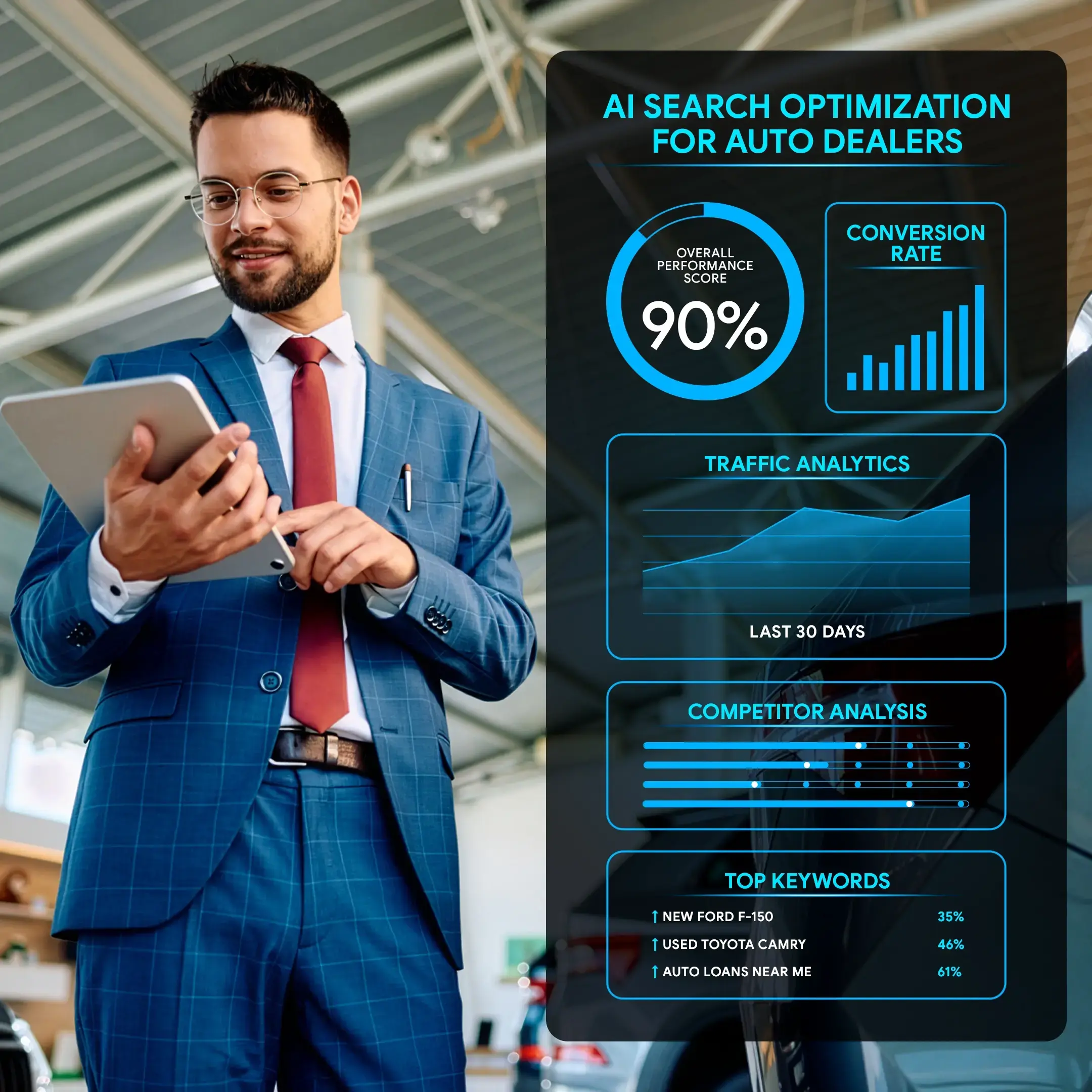
1. Optimize Your Google Business Profile (GBP)
Your Google Business Profile is still your most important local asset. Make sure it includes:
- Correct primary and secondary categories (for example: "Toyota dealer," "Used car dealer," "Auto repair shop")
- A complete list of services
- Accurate hours and attributes (EV charging, pickup, loaner cars, etc.)
- UTM-tagged website and appointment links
- Updated photos and inventory integrations
A clean, complete GBP increases your chances of being cited in AI summaries.
2. Build Hyperlocal Landing Pages
Create dedicated pages for each major city or neighborhood in your Primary Market Area to strengthen your dealership’s visibility in modern local search. For auto dealers, these location pages help you show up more often for high-intent searches like “used cars in [city],” “buy here pay here [city],” “car dealership near me,” and model-based queries with local intent (for example, “Toyota Camry used Irvine”). They also help Google and other platforms understand exactly where you sell, service, and deliver vehicles, which can improve both map visibility and organic rankings.
Instead of relying on one generic “service area” page, city and neighborhood pages let you align your inventory, financing options, and dealership value proposition with what shoppers in that specific area care about. You can highlight things like commute-friendly vehicles for that city, local trade-in demand, popular trims, financing programs (including subprime or in-house financing, if applicable), and any delivery or appointment options. This makes the page more relevant to the search query and more convincing to the customer, which typically improves lead conversion.
These pages also reinforce your overall local trust signals: your Google Business Profile, consistent NAP (name, address, phone) across citations, review themes from customers in that area, and structured data. In the era of AI search and voice, strong geographic specificity increases the likelihood that your dealership is recommended when someone asks for “the best used car dealer in [city]” or “dealerships that work with bad credit near [neighborhood].”
To avoid thin or repetitive content, each location page should be genuinely useful and locally specific, not a template where only the city name changes. Unique copy, localized FAQs, directions/landmarks, trade-in and financing context, and internal links to relevant inventory and service pages are what turn these pages into a scalable local SEO asset that drives real calls, form fills, and showroom appointments.
Each page should include:
- Embedded Google Map
- Driving directions
- Local inventory highlights
- Community references
- One dominant CTA (call, directions, or browse inventory)
These pages help AI systems associate your dealership with specific locations and intent.
3. Maintain NAP and Citations
Name, Address, and Phone consistency remains critical for auto dealers because it directly impacts how confidently Google and other platforms can verify your dealership as a real, trustworthy local business. When your NAP details vary across the web, you can end up with duplicate listings, split reviews, incorrect map pins, or suppressed visibility in the local pack. It can also create customer friction that costs leads, such as shoppers calling the wrong number, showing up at the wrong address, or assuming your dealership is closed.
For dealerships, this gets even more important when you have multiple departments (Sales, Service, Parts), multiple phone lines, call tracking numbers, multiple locations, or listing profiles for specific brands. The goal is to keep one “source of truth” for your primary dealership identity and then apply any department-level details in a structured, consistent way so search engines and shoppers see the same core information everywhere.
Consistency also supports stronger local signals in AI-driven discovery. When information is aligned across trusted directories and platforms, it reduces ambiguity and increases the likelihood your dealership is surfaced in “near me” results, voice search, and AI answers that rely heavily on entity verification.
Ensure your information matches across:
- OEM directories
- Dealer platforms
- Local business listings
- Chambers of commerce
- Automotive vertical sites
Quality matters more than quantity. Strong, trusted citations improve GEO authority.
4. Prioritize Technical Performance and UX
AI systems and search engines increasingly prioritize websites that deliver fast, seamless experiences, especially on mobile devices where most car shoppers begin their research. For auto dealers, this is critical because inventory browsing, vehicle comparisons, financing applications, and phone calls often happen on smartphones. A slow or clunky mobile experience can cause shoppers to abandon your site and move directly to a competitor, third-party marketplace, or listing platform.
Modern AI-powered search experiences also measure real user satisfaction signals such as page speed, stability, usability, and engagement. If your site loads quickly, displays inventory clearly, and makes it easy to take action, AI systems are more likely to surface your dealership as a recommended result. Conversely, slow load times, intrusive pop-ups, broken inventory feeds, or difficult navigation can reduce visibility and conversions.
Speed and mobile performance also directly impact paid advertising efficiency, lead quality, and overall ROI. When shoppers can quickly view vehicles, filter inventory, calculate payments, check availability, or call your dealership with one tap, they are far more likely to convert into real showroom visits or phone leads.
Focus on:
- Sub-2 second load times
- Mobile-first design
- Clean navigation
- Logical internal linking from home to inventory to offers to service
Speed and usability are now table stakes for both SEO and AI visibility.
Example: A "Used Cars in Irvine, CA" page with inventory modules, FAQs, directions, and schema markup can rank locally and appear in AI-generated summaries.
Practical AEO for Dealers: Answer First, Sell Second
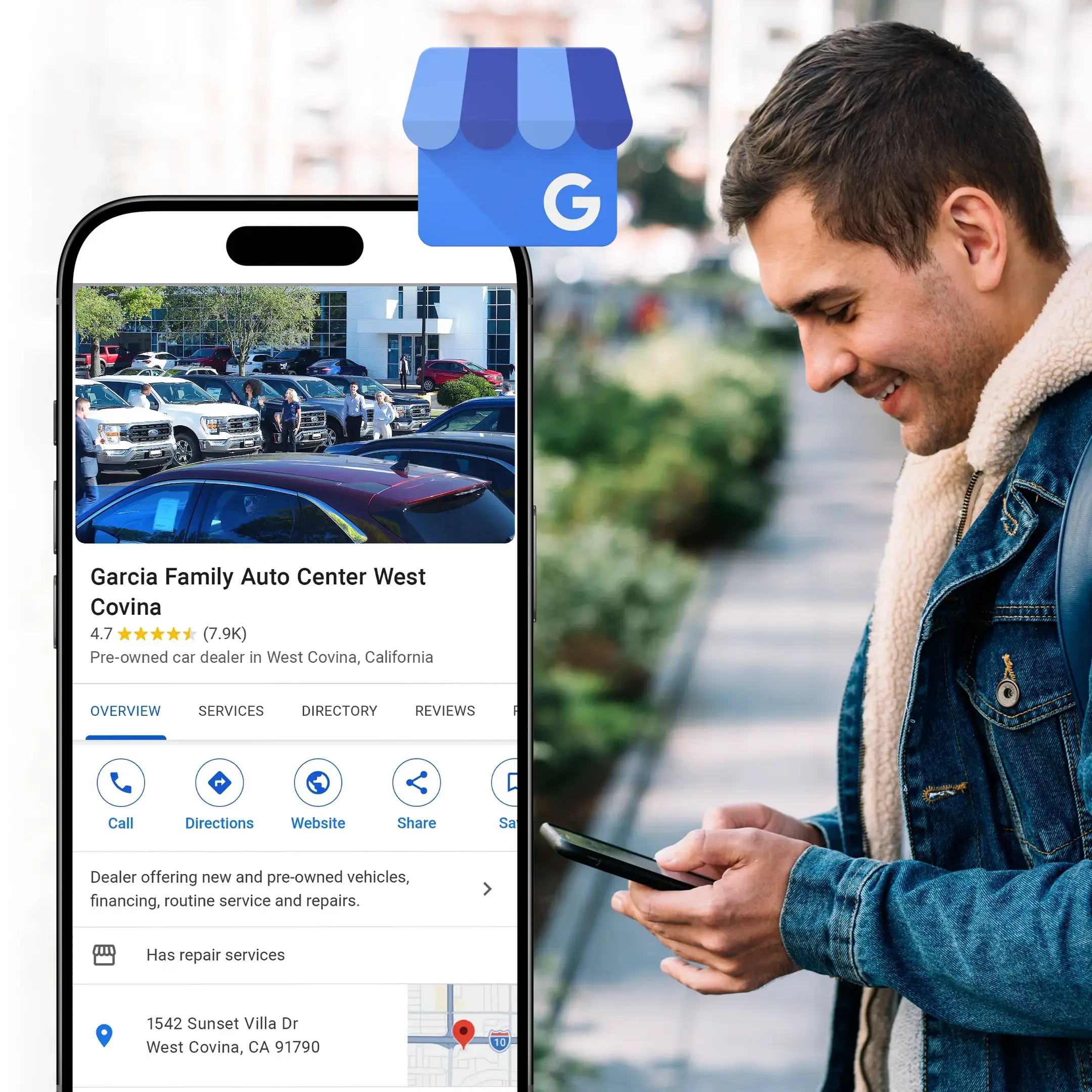
Answer Engine Optimization (AEO) is about positioning your dealership as the most reliable source of clear, direct answers to the questions car shoppers are already asking online. Instead of only optimizing for traditional keyword rankings, AEO focuses on helping AI systems, voice assistants, and search features extract precise information from your site to present as instant answers. For auto dealers, this means addressing real buyer concerns such as pricing, financing options, trade-in values, warranties, availability, service timelines, and the buying process in plain, easy-to-understand language.
Today’s shoppers increasingly use conversational queries like “Can I buy a car with bad credit near me,” “How much is a monthly payment on a used SUV,” or “Do dealerships accept trade-ins without buying.” AI platforms look for authoritative pages that answer these questions directly, not pages filled with generic marketing language. When your content provides clear explanations, structured information, and transparent details, your dealership is more likely to be cited, summarized, or recommended in AI-generated responses.
Strong AEO also builds trust before the customer ever contacts you. By proactively addressing concerns about financing, documentation, approval requirements, vehicle condition, delivery options, or service policies, you reduce uncertainty and increase the likelihood that shoppers choose your dealership when they are ready to act.
In a competitive automotive market, being the dealership that “explains things best” can be just as powerful as being the one that ranks highest. This approach improves visibility across traditional search, voice queries, and emerging AI discovery platforms while attracting more qualified, high-intent buyers.
Answer Engine Optimization is about becoming the most reliable source of clear, direct answers.
1. Turn Questions into Content
Identify your most common customer questions and build pages around them:
- Do you offer oil changes for Honda vehicles?
- What is your documentation fee?
- Can I buy a car online?
- Do you work with bad credit?
Place the answer near the top of the page in clear language.
2. Lead With the Answer
The first 100 to 150 words matter most. Start with:
- A direct response
- A short explanation
- Then supporting detail
Avoid burying the answer under marketing copy. AI tools usually pull from early content.
3. Build Intent-Based FAQ Hubs
Create organized FAQ sections for high-interest topics such as:
- Financing and credit challenges
- EV ownership and charging
- Lease vs. buy comparisons
- Certified pre-owned vs. used
- Protection products and warranties
These hubs become training data for AI systems evaluating your authority.
4. Use Structured Data
Schema helps answer engines understand your content. Prioritize:
- FAQPage
- QAPage
- Product
- Service
- LocalBusiness
- BreadcrumbList
Structured data increases eligibility for featured answers and AI citations.
Example: A page titled "How Much Is a Brake Job at [Dealer] in [City]?" with pricing ranges, time estimates, and a scheduling button is ideal AEO content.
Practical GEO for Dealers: Building Share of AI Voice
Generative Engine Optimization (GEO) focuses on how often your dealership is mentioned, recommended, and trusted within AI-powered systems such as chat-based search, assistants, and generative answer platforms. Unlike traditional SEO, which emphasizes rankings on a results page, GEO is about becoming a recognized local entity that AI models confidently reference when users ask for dealership recommendations, financing options, vehicle availability, or service providers in a specific area.
For auto dealers, this means building strong signals of real-world credibility across the web. AI systems look for consistent mentions from reputable sources such as review platforms, local media, automotive directories, partner sites, community organizations, and high-quality backlinks. They also analyze sentiment, expertise, and authority to determine which businesses are trustworthy enough to recommend. The more your dealership is discussed positively and consistently online, the more likely it is to appear in AI-generated suggestions.
GEO also benefits from clear brand identity, complete business profiles, accurate location data, strong review volume, and authoritative content that demonstrates expertise in vehicles, financing, trade-ins, and ownership. Community involvement, sponsorships, press coverage, and partnerships can further strengthen these signals because they create verifiable third-party references to your dealership.
In a world where shoppers increasingly ask AI tools questions like “Which dealership near me has the best financing” or “Where should I buy a reliable used car,” GEO determines whether your dealership is included in the answer at all. Building these signals helps ensure your business is not only visible but actively recommended when high-intent buyers are ready to choose.
GEO focuses on how often your dealership is mentioned, recommended, and trusted inside generative systems.
1. Optimize for "Near Me" and Local Intent
Create pages and content targeting:
- "Oil change near me"
- "Used SUVs near [City]"
- "Toyota service in [Metro]"
Use geo-modifiers in headings, metadata, and body copy while reinforcing location signals.
2. Earn Third-Party Mentions
AI engines weigh external validation heavily. Pursue placement in:
- Local "Best Dealers" lists
- Community blogs
- News outlets
- OEM and partner directories
- Regional business publications
These mentions increase your recommendation probability.
3. Strengthen Reviews and Reputation
Reviews are now AI training signals. Encourage customers to mention:
- Vehicle models
- Services used
- City or neighborhood
- Staff experiences
Volume, recency, and detail all matter.
4. Publish Local Topical Content
Short, useful posts tied to your market help build topical authority:
- Weather-related vehicle tips
- Commuter-friendly vehicle guides
- EV adoption in your region
- Event sponsorships
- Community involvement
Example: Being featured in "Best Honda Dealers in Orange County" plus maintaining a 4.6+ rating significantly increases AI visibility.
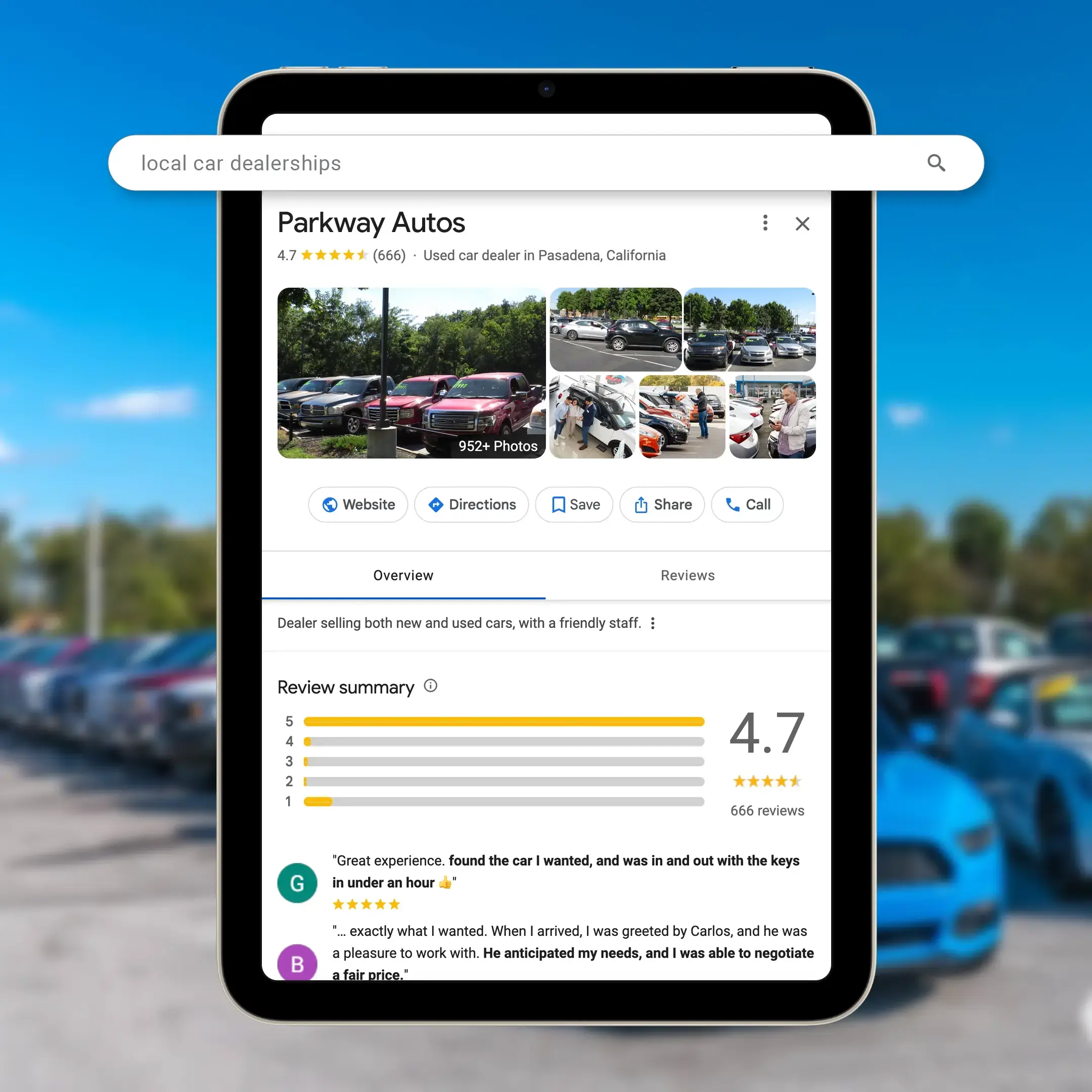
On-Site Content Architecture for AEO and GEO
Your website structure should mirror how AI systems understand real-world entities and their relationships. For auto dealers, this means organizing your site in a way that clearly connects your dealership brand, locations, inventory, vehicle makes and models, services, financing options, and customer actions. When these elements are logically structured, search engines and AI platforms can more easily interpret what you sell, where you operate, and how different parts of your business relate to one another.
A well-organized dealership site typically includes clear hierarchies for new and used inventory, make and model pages, body style categories, service and parts departments, financing information, trade-in tools, and location pages. Internal linking between these sections helps AI systems understand context. For example, a city page linking to relevant inventory available in that area, or a model page linking to financing options and service details, reinforces meaningful relationships that improve discoverability.
This structure also enhances the user experience. Car shoppers can quickly move from researching a vehicle to viewing available units, estimating payments, checking eligibility, or scheduling a test drive. When navigation aligns with real buying behavior, engagement improves, bounce rates decrease, and conversion likelihood increases.
Structured organization further supports advanced features such as rich results, inventory visibility, and AI-generated summaries that pull details directly from your site. Without clear structure, even high-quality content can be overlooked because systems cannot confidently interpret how it fits into the broader dealership entity.
Your website structure should mirror how AI systems understand entities and relationships.
Build Pillar and Cluster Models
Pillars:
- New [Brand] in [Metro]
- Used Cars [Metro]
- Auto Service [Metro]
Clusters:
- Model pages
- Buyer guides
- Finance content
- EV resources
- Service FAQs
This architecture strengthens topical authority.
Treat Inventory Pages as Content Assets
Inventory pages should not be database-only outputs. Enhance them with:
- Unique introductory copy
- Local references
- FAQs
- Internal links to finance and service
Add Textual Detail for AI Parsing
Do not rely only on images. Include:
- Trim levels
- Packages
- Features
- Performance specs
- Use cases
AI systems need readable text to interpret your vehicles.
Example: A "Toyota RAV4 Hybrid for Sale in [City]" page with commute benefits, fuel cost examples, and Q&A sections supports complex AI queries.
Processes You Can Productize
Strong AEO and GEO programs are repeatable. At Get My Auto, we recommend building scalable workflows.
AEO/GEO Audit
Evaluate:
- GBP performance
- Answer coverage
- Schema implementation
- Competitor gaps
- Local SERP visibility
Content Sprints
Sprint 1:
- Geo-landing pages
- Core finance and service FAQs
Sprint 2:
- EV content
- High-margin service guides
- Protection product content
Reputation and PR Package
- Review generation systems
- Local media outreach
- Directory inclusion
- Community partnerships
Measurement
Track:
- Map pack exposure
- FAQ impressions
- Q&A page engagement
- Brand mentions in AI tools
- Conversion paths from informational content
Visibility without attribution is still influence. Measurement helps connect it to revenue.
Why AEO and GEO Matter for Dealers in 2026 and Beyond
AI-powered search is becoming the decision layer of the buying journey. Shoppers are increasingly asking:
- Which dealer should I trust?
- Where should I service my car?
- Who offers the best value nearby?
If your dealership is not part of those answers, you are invisible before the shopper even clicks. AEO and GEO ensure your store remains present at the moment decisions are made.
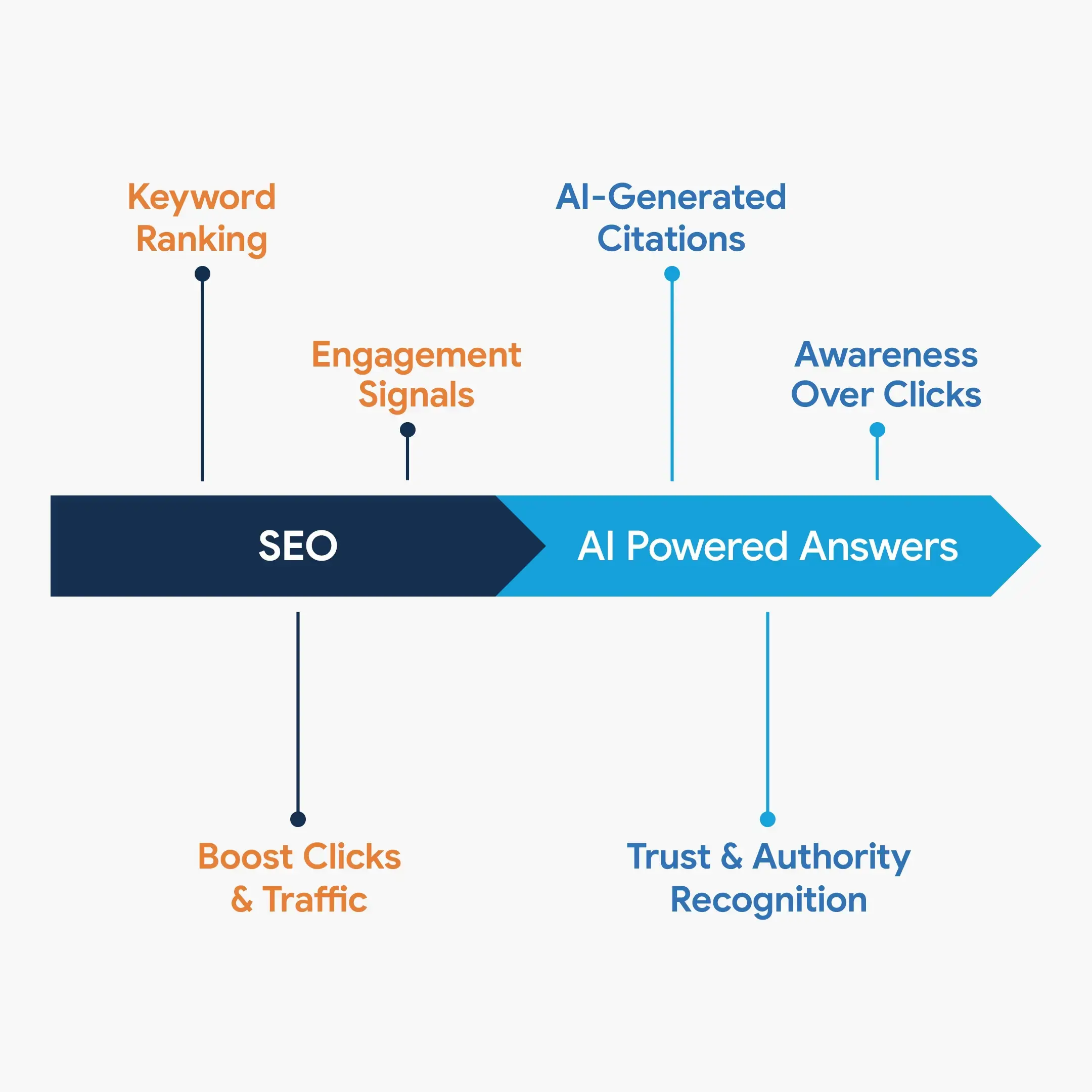
The Future of Automotive Search Visibility in an AI-Driven Market
Answer Engine Optimization (AEO) and Generative Engine Optimization (GEO) are not replacements for traditional SEO. They represent the next evolution of how dealerships earn visibility as search behavior shifts from keyword typing to conversational questions and AI-guided discovery. Foundational SEO still matters, but dealers that layer answer-driven content, strong local authority signals, and clearly structured data on top of that foundation will capture a larger share of high-intent shoppers.
As AI becomes the primary interface for research, recommendations, and decision support, the dealerships that “show up” will be those that demonstrate expertise, transparency, and real-world credibility across the web. This includes clear explanations of financing options, detailed inventory information, consistent local presence, strong reviews, and authoritative content that helps buyers make confident decisions. In many cases, customers will form a preference before ever visiting a website or stepping into a showroom.
Dealers who invest now position themselves to influence the entire digital buying journey, from early research to final purchase and long-term service relationships. Rather than competing only on price or proximity, they compete on trust, clarity, and accessibility of information, factors AI systems are designed to prioritize.
At Get My Auto, we believe the future of dealer marketing belongs to stores that combine strong technology, trusted data, and intelligent visibility strategies. The dealerships that align their digital presence with how modern search actually works will be the ones that win more qualified leads, stronger customer relationships, and sustainable growth in the years ahead.
At Get My Auto, we believe the future of dealer marketing belongs to stores that combine strong technology, trusted data, and intelligent visibility strategies.
Topics
Share this article
Help others discover this content